Making Stars Shape Halftone Background 50-15 Work for Your Everyday Creative Projects
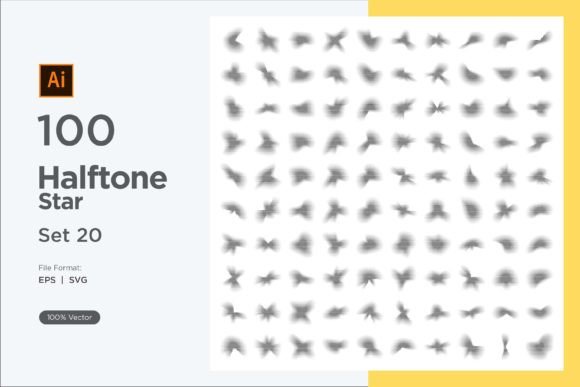
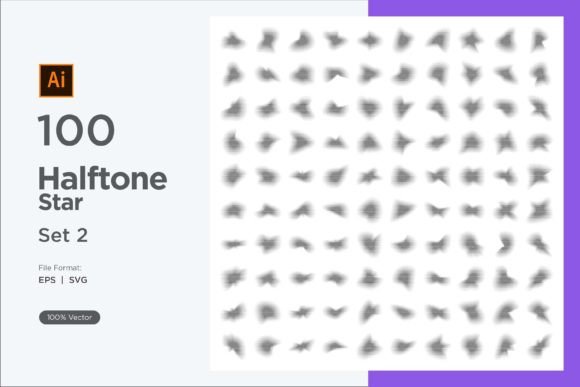
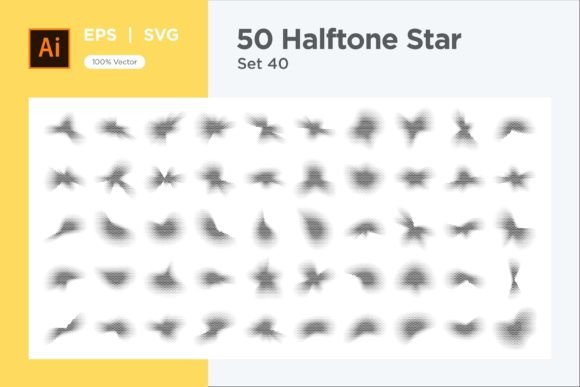
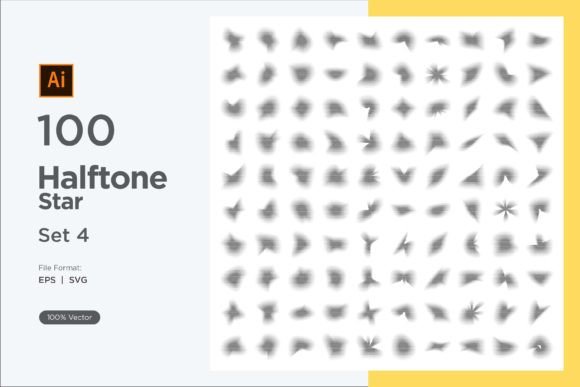
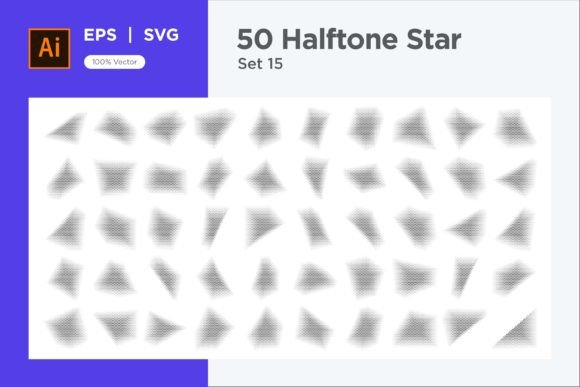
When you first glance at Stars Shape Halftone Background 50-15, it’s easy to see it as a simple pattern file. But spend a few minutes working with it, and you realize it’s something more — a flexible visual ingredient that can quietly transform a flat layout into something with texture, rhythm, and character. The concept isn’t complicated: stars arranged in a repeated layout, each carrying a halftone treatment that gives them a dotted, gradient-like depth. The result is a background that feels both structured and organic, capable of shifting from playful to elegant depending on how you use it. The pack includes 50 EPS and 50 SVG files, all fully editable and resizable in any vector tool, from Adobe Illustrator to free alternatives. That might sound technical, but in practice it means you can grab a file, tweak a shape or change a color, and drop it into a project without starting from scratch.
What Gives a Star Halftone Background Its Distinctive Feel
The magic isn’t just in the star shape itself. It’s the marriage of repetition and the halftone effect. Instead of flat, solid fills, each star carries a subtle pattern of dots or gradients that mimic shading. This tricks the eye into perceiving depth, almost like a faded print or a screen-printed texture. Depending on the arrangement — some files might use an orderly grid, others a more scattered, cosmic spread — the mood shifts. A tight, regular pattern can read as crisp and modern, while an irregular placement leans toward dreamy or retro. You’ll notice this texture works especially well when you need to avoid the sterile look of a solid-color backdrop. Whether you’re designing a website hero section, a poster, or a product label, the halftone finish adds a layer of intent without screaming for attention.
Because the stars repeat, the background creates a visual hum. It’s not chaotic; it’s a controlled rhythm that can complement bold typography or anchor a minimalist composition. The built-in shading means you don’t need to stack multiple elements to create depth. That’s a time-saver, and it often leads to cleaner files that are easier to manage when you’re juggling client revisions or printing deadlines.
Where This Pattern Settles Naturally Into Real Projects
You might pull up Stars Shape Halftone Background 50-15 for a birthday invitation one day and a clothing tag the next. That range is part of its appeal. Consider the person planning a celestial-themed baby shower: they can take one SVG file, switch the black dots to a soft gold, and use it as the inside lining of an invite. The same star pattern, recolored in neon pink and cyan over a dark background, suddenly feels like an arcade carpet straight out of the 1980s for a retro gaming stream overlay. No extra design work needed, just a palette swap.
Small business owners often find a use case without looking. A baker who prints custom cupcake wrappers might tint the stars to match brand colors and use a scattered halftone variant to wrap around each treat. The texture softens what could otherwise be a stark paper surface. A candle maker could use the same approach on labels, letting the stars peek through a translucent sticker layer. In these scenarios, the background doesn’t compete with the product — it supports it.
Educators and workshop facilitators also tap into these files in low-profile but effective ways. A handout on constellations doesn’t have to be a plain white sheet. A muted halftone star grid in pale blue behind the text can make the material feel more engaging without distracting from the lesson. The same goes for presentation slide decks. Swapping a standard gradient for a subtle star halftone on title slides gives a presentation personality, and because the files are vectors, scaling them up for a projector screen never pixelates.
How Different People Use the Asset Across Creative, Commercial, and Personal Work
A freelancer building a brand identity for a boutique hotel might layer one of the EPS files into a pattern swatch in Illustrator. By adjusting the opacity and blending mode, the stars become a barely-there texture on menu covers or key card wallets. The halftone dots suggest a handcrafted, almost artisanal feel, which aligns with a boutique experience. And because the 50 included files aren’t just recolored copies of the same layout — they vary in arrangement and scale — there’s room to pick the exact density that fits the mood board.
Bloggers and content creators often need custom pin graphics or YouTube end screens that don’t look like stock assets. Dropping a star halftone background behind a quote or a product photo injects consistency into a visual brand. If you post weekly, you can cycle through a few different patterns from the pack, keeping the feel recognizable while avoiding monotony. Since SVGs are text-based and lightweight, they load quickly on website builders like Squarespace or WordPress, making them practical for digital use where site speed matters.
On the more niche side, hobbyists crafting printable vinyl stickers for water bottles or laptops find these backgrounds reduce the amount of manual shading work. Instead of hand-drawing halftone dots, they scale a star pattern behind their illustration, crop it to shape, and cut. The vector quality ensures clean edges on a Cricut or Silhouette machine. A DIY wedding planner might do the same for table numbers or escort cards, choosing a romantic scattered star layout that feels bespoke without the custom design price tag.
Even in professional packaging, the halftone effect plays a specific role. A craft beer label designer might use a star pattern as a secondary background behind hops or wheat illustrations. The halftone dots, when converted to a single ink plate, simulate a hand-pulled screen print on a matte label stock — a look that many microbreweries chase for its authenticity. Because the files are fully editable, the designer can delete individual stars near the edges to create a more organic fade, no masking required.
What Experienced Users Pay Attention to Before They Download
Before you load one of the 50 EPS or SVG files into your canvas, a few practical considerations can save hassle. The most immediate is your software. These are vector files, so raster programs like Photoshop can open them only as smart objects or need them placed via File > Place. If your workflow lives in pixel-based tools, you’ll want to check how your app handles SVG imports. That said, free apps like Inkscape or web-based editors handle them confidently, and the color and shape editing remains straightforward regardless of platform.
Another aspect is size and scale. Halftone patterns can create an optical moiré effect if scaled too small or printed at low resolution. When you shrink a dot pattern beyond its intended density, the dots can merge or create unintended wavy lines. Most users avoid this by keeping the background at a size where the halftone dots remain visible, or they run a quick test print on a home printer before committing to a full run at a commercial printer. The good news is that since these are vectors, scaling up never introduces blurriness — just be mindful when scaling down.
Licensing expectations also matter, especially for commercial products. While the package typically allows broad use, anyone planning to resell the files as-is or include them in a competing asset pack should double-check the terms. The safest approach is to use them as incorporated design elements rather than redistributing the raw files. For most users — creating client work, merchandise, digital products, or social media graphics — this is a non-issue.
File organization can become a quiet productivity win. 50 files might feel daunting if you don’t preview them first. Many designers open a few, set up a reference sheet, and tag the ones that match specific moods or densities. That way, when a project calls for “something airy and spaced out” versus “tight and industrial,” you can quickly grab the right number. A little upfront sorting turns a pile of assets into a instantly navigable library.
Connecting the Features to Everyday Outcomes
It’s easy to list features: editable vectors, halftone dots, resizable shapes, color flexibility. But what those features actually deliver is reduced friction during creation. Instead of spending an hour building a halftone star pattern from scratch — duplicating, blending, masking — you open a file, change the accent color to match your brand, and move on. That reclaimed time can go toward refining the overall layout or handling last-minute client feedback.
The visual consistency the pack provides is another quiet outcome. When multiple pieces of a campaign — perhaps a poster, a social tile, and a digital ad — all share the same star halftone background but at different scales, the audience perceives a cohesive identity without consciously noticing the background. That subtle repetition builds recognition. A coffee shop running a loyalty card promotion, for example, might use the pattern on the card, the in-store table tent, and the Instagram story. The texture ties them together, and customers begin to associate that dotted star field with the brand experience.
There’s also an unexpected benefit for those who struggle with color theory. The halftone effect naturally introduces multiple tonal values within a single star. When you apply a new fill color, the gradient-like dot dispersion means you get a range of shades without touching a gradient tool. A single navy blue color swatch might produce stars that appear to have lighter blue centers because the dot density changes. This creates a richer appearance with less effort, helpful for anyone who isn’t a trained colorist but wants a polished look.
In the end, Stars Shape Halftone Background 50-15 earns its place not by being revolutionary, but by being adaptable enough to slip into a wide spectrum of real tasks. From a teacher making a PDF worksheet to a label designer chasing a vintage screen-printed feel, the same star patterns take on different roles depending on who’s holding the mouse. That versatility, wrapped in the practical format of editable vectors, is what keeps a resource like this in frequent rotation long after the first download.