Stars Shape Halftone Background 100-7: A Designer’s Evaluation
Designers often seek backgrounds that balance visual texture with clean scalability. Stars Shape Halftone Background 100-7 is a collection of vector-based patterns that combines two classic elements: star motifs and a halftone effect. Instead of a single preset, the package delivers 100 distinct files, each offering a variation on this theme. For anyone evaluating whether this resource fits their workflow, it helps to move beyond the surface description and examine what it actually provides, where it shines, and where alternatives might make more sense.
What Exactly Is Stars Shape Halftone Background 100-7?
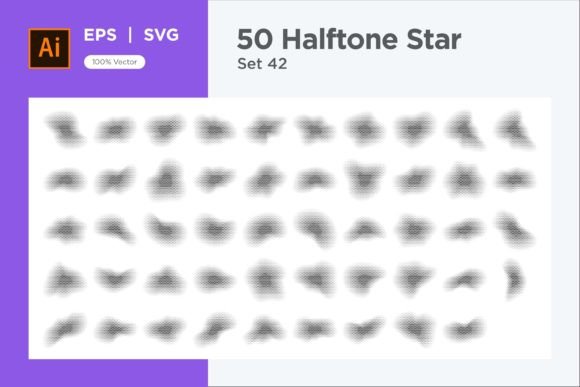
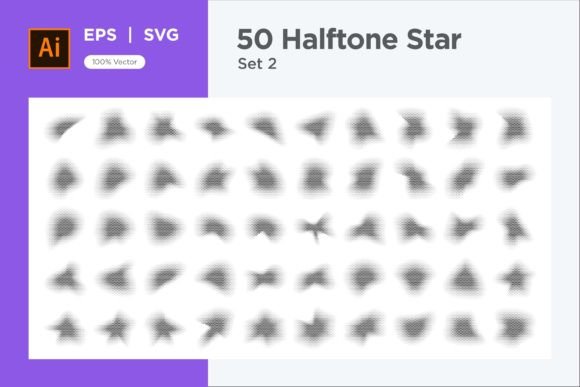
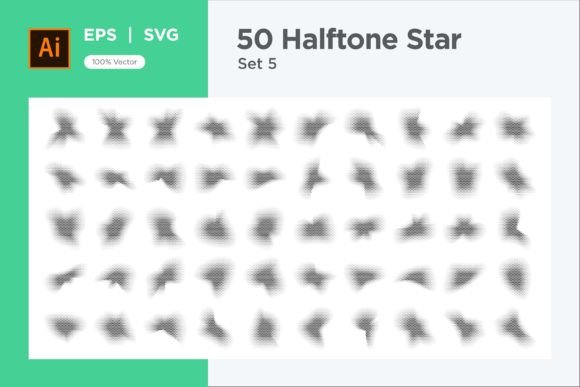
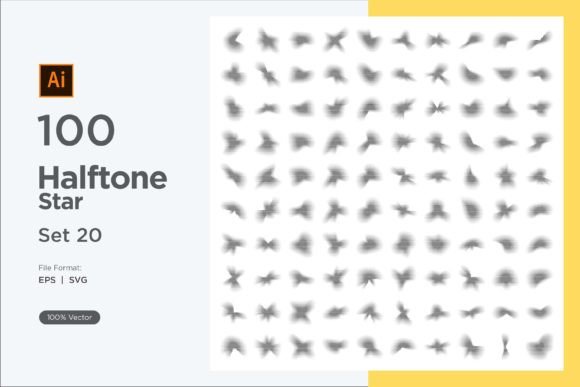
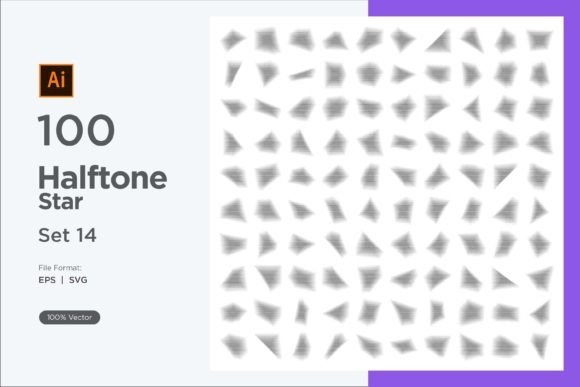
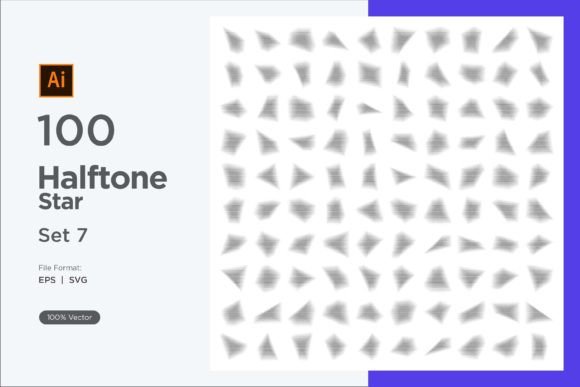
At its core, this product is a set of 100 EPS files and 100 SVG files—200 total assets—containing star-shaped halftone backgrounds. The star shapes act as the foundational motif, repeated in arrangements that range from orderly grids to scattered, organic clusters. The halftone treatment applies gradients or dot-pattern shading within or around those stars, creating depth and a printed, retro feel without relying on raster textures.
Each file is fully vector, meaning you can scale it to any size without loss of quality. Because the artwork remains editable in tools like Adobe Illustrator, Affinity Designer, or Inkscape, you can change colors, adjust the density of the halftone, modify individual star shapes, or extract elements for other uses. The “100-7” in the name typically refers to a specific design variation or edition within a broader series, but the essence is the same: a large library of ready-to-use vector patterns with a star-halftone identity.
Why Designers Seek Out Halftone Star Backgrounds
The combination of stars and halftone is versatile. It evokes a range of visual associations—starry night skies, vintage comic book coloring, space exploration themes, retro gaming menus, or whimsical children’s book illustration. Halftone itself carries a tactile, mechanical feel that contrasts nicely with flat vector design, making layouts feel more dynamic without resorting to heavy textures or photographs.
Practically, having 100 pre-built options means you can quickly audition multiple moods. One background might use large, hollow stars with dense dot shading; another might feature tiny solid stars that fade out like distant constellations. This variety reduces the time spent building these effects from scratch, especially if you frequently need themed backgrounds for posters, social media graphics, packaging, or website hero sections.
Evaluating the Bundle: Benefits and Practical Advantages
The most immediate advantage is format flexibility. EPS files are widely compatible with professional vector software, while SVG files integrate seamlessly into web and UI design workflows. You can open an SVG directly in a code editor, inline it into HTML, or style it with CSS, which is valuable for web designers who want backgrounds that remain crisp on retina displays. The dual format inclusion means you are not locked into a single ecosystem.
Another strength is full editability. The description notes that colors and shapes are easy to modify. In practice, this means you can recolor a background to match a brand palette, isolate only the stars, or even repurpose the halftone treatment on other shapes. For designers who like to deconstruct and learn from pre-made assets, these files offer a reusable resource far beyond a one-click pattern fill.
The volume—100 distinct origins—also matters. Instead of hoping one pattern fits, you have a library to sample and compare. This is especially beneficial for projects with vague creative briefs, where stakeholders might need to see multiple directions before settling on an aesthetic.
Understanding the Tradeoffs and Considerations
No design asset is universally perfect. One potential limitation is specificity. The star motif is prominent; if your project calls for a different shape or a more neutral texture, this collection may not align. While you can edit the vectors, removing or replacing every star could become time-consuming, negating the time-saving advantage.
Halftone effects also vary in style. Some designs lean heavily into coarse dots for a bold pop-art look, while others use subtle gradients. The bundle likely covers a range, but you won’t know the exact balance of styles until you inspect the files (or preview thumbnails if provided). If you need a highly polished, photorealistic star field, these vector halftones might feel too graphic or illustrative. They excel in stylized applications, not in replicating natural astrophotography.
Another consideration is file management. With 200 files, organization matters. You’ll need to name and categorize them in a way that makes sense for your workflow. Without careful previewing, the sheer number could lead to decision fatigue rather than creative speed.
Where This Collection Excels (Strong Fit Scenarios)
If your work regularly involves print design with a nostalgic, playful, or cosmic twist, this bundle is a strong contender. Screen-printing posters, event flyers, product labels, and editorial layouts can all benefit from backgrounds that have built-in texture and rhythm. The EPS format ensures your prepress software will handle them cleanly.
For web and app designers, the SVG files offer immediate value. Animated star halftones, loading screens, or subtle background elements become easy to prototype when you can copy and paste SVG code. The vector nature means these patterns won’t pixelate on high-DPI screens, and they can be responsively scaled with minimal performance overhead compared to large raster images.
Another fitting scenario is rapid concept development. If you need to present three or four moodboard options for a new brand identity or campaign, having a ready-made set of textured backgrounds lets you focus on type and layout rather than spending an hour crafting star patterns from scratch. The editable features also mean you can quickly adapt one file to show color variations during client reviews.
When You Might Consider Alternatives
There are situations where a different resource would serve you better. If your project demands photographic realism—say, a space documentary poster that requires high-resolution star photos—a vector halftone will feel too stylized. In that case, stock photography or digital painting might be preferable.
If you need simple, minimal star backgrounds without the halftone texture, a basic shape generator or a lightweight icon set could be more efficient. The halftone effect is a defining feature here, and removing it from every file would be impractical.
Designers working under very narrow brand constraints might also pause. If brand guidelines strictly forbid distressed or dotted textures, or if the star shape itself conflicts with the visual identity, this bundle’s main appeal is lost. Similarly, if you only need one or two backgrounds occasionally, the cost-effectiveness of 100 files may not justify the purchase compared to ala-carte options or free resources.
How to Decide If It Aligns With Your Project Goals
Start by defining the role the background will play. Is it a primary storytelling element (like a book cover) or a subtle supporting texture (like a website section divider)? Stars Shape Halftone Background 100-7 tends to draw attention because the halftone treatment is visually active—it won’t disappear entirely. This is a strength when you want dynamism, but a potential drawback if you need a near-invisible texture.
Next, assess your technical environment. If you work primarily in raster software like Photoshop, vector files are still usable but lose their infinite scalability once rasterized. However, the ability to place and resize them at enormous print dimensions without quality loss remains valuable. If you’re fully immersed in vector or code-based design, the benefits multiply.
Consider your editing needs. Are you likely to tweak colors and shapes, or do you need a “drop in and go” solution? The more you customize, the more value you extract from the editable format. If you rarely modify assets, the library size might be overkill, and a smaller, highly curated set could reduce browsing time.
Practical Insights for Working With Vector Halftone Files
To get the most out of a collection like this, organize your assets immediately. Create folders by style (e.g., dense halftone, sparse scatter, large stars) and save color-swapped versions of your most-used patterns. This upfront work pays off when you’re under deadline.
When editing, be mindful that halftone patterns often rely on many individual vector objects. Complex backgrounds can slow down your software if you’re working on an older machine. If performance becomes an issue, consider rasterizing a copy at your target resolution for use in layout, while keeping the original vector safe for final output.
For web projects, test SVG files in different browsers. Most modern browsers handle SVG well, but complex halftones with thousands of tiny dots might impact rendering speed on low-powered devices. If you notice slowdowns, simplify the file, combine paths, or use the SVG as a static CSS background with appropriate sizing.
Lastly, respect the license terms. The product description mentions you can contact the creator for help, indicating support is available. Clarify whether the backgrounds can be used in templates for resale or as part of a logo, as usage rights vary between marketplaces.
Weighing the Value for Your Creative Toolkit
Stars Shape Halftone Background 100-7 isn’t a one-size-fits-all solution, but it fills a specific niche well. Its combination of a recognizable motif, editable vector files, and generous quantity makes it a practical resource for designers who regularly lean into playful, retro, or celestial aesthetics. The dual EPS and SVG delivery is particularly thoughtful, bridging print and digital workflows without compromise.
The decision ultimately hinges on how closely the halftone star style aligns with your typical projects. If you find yourself repeatedly building star patterns, or if you need a fast way to inject textured energy into flat layouts, this collection can save hours and inspire new directions. If your work rarely touches these visual themes, the bundle may gather digital dust.
As with any design resource, preview the available thumbnails carefully, check the license, and consider how many of the 100 designs feel usable to you personally. Even a fraction of the set can justify the investment if it sparks a creative solution or streamlines a recurring task.