The Art and Utility of Stars Shape Halftone Backgrounds in Modern Design
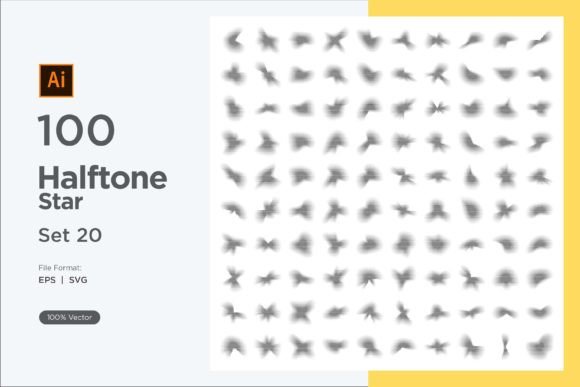
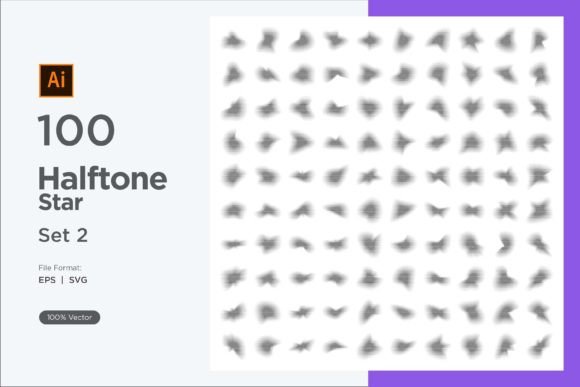
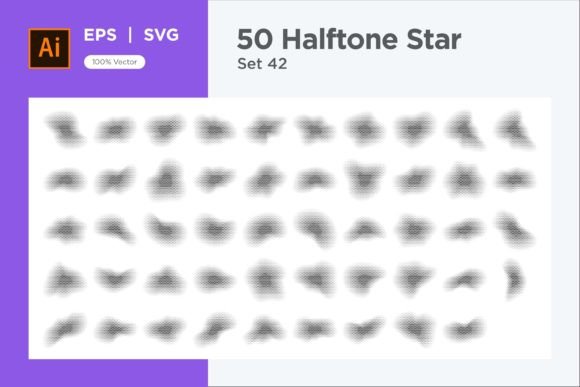
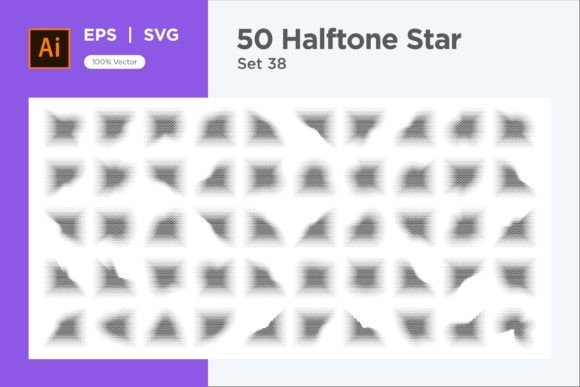
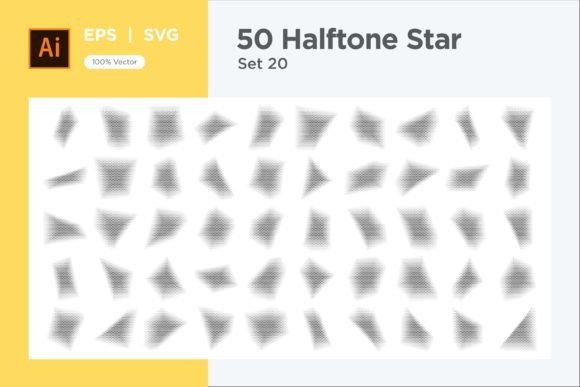
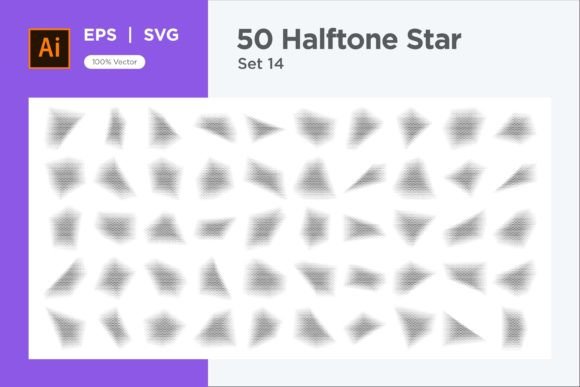
Visual texture can transform a flat composition into something that feels alive. Among the many techniques available to designers today, the stars shape halftone background occupies a distinctive space where geometry meets atmosphere. The concept behind Stars Shape Halftone Background 50-14 represents a specific interpretation of this approach, combining repeated stellar motifs with halftone rendering to produce backgrounds that are simultaneously structured and organic. Understanding how this design element works, where it excels, and what makes it technically versatile reveals why it has become a valued resource across multiple creative disciplines.
The Visual Language of Star Halftones
At its core, a halftone background using star shapes operates on a duality that few other patterns can claim. The star itself carries cultural weight—it evokes navigation, aspiration, celestial wonder, and even nostalgia depending on its treatment. When that star is subjected to halftone processing, the result introduces tonal variation that softens the geometric precision. The dots or gradients within each star create internal shadows and highlights that make the shape feel dimensional rather than flat.
What distinguishes star-based halftones from their circular counterparts is the directional energy they introduce. Circles are neutral and ambient. Stars, with their points radiating outward, inject movement. Even in a tightly gridded arrangement, a field of halftone stars feels as though it could shimmer or rotate. This perceptual quality makes the technique particularly effective for projects that need to convey dynamism without resorting to animation or complex layering.
How the Halftone Effect Elevates Repeated Star Motifs
Halftoning is traditionally associated with print reproduction—the method of breaking continuous tone images into dots of varying size or spacing. In digital design, however, the halftone effect has been reclaimed as a deliberate aesthetic choice. When applied to star shapes, the halftone treatment does more than simulate shading. It introduces micro-texture within each individual star, meaning that even a single star in isolation carries visual interest.
In a repeated pattern, this internal texture accumulates. The viewer perceives two layers simultaneously: the macro-pattern of stars distributed across the canvas, and the micro-pattern of halftone dots within each star. This dual reading keeps the eye engaged. A solid-color star pattern might read as wallpaper. A halftone star pattern reads as a considered design element with depth and complexity. The Stars Shape Halftone Background 50-14 package harnesses this principle across its included file formats, ensuring that the nuanced interplay of star shape and halftone rendering is preserved whether the asset is used in print, web, or motion graphics.
Practical Applications Across Creative Industries
The versatility of star halftone backgrounds becomes evident when examining how different sectors put them to work. Their appeal spans from commercial branding to experimental art, and each context reveals a different facet of the technique's potential.
Branding and Identity Design
Brands that wish to align themselves with concepts of innovation, aspiration, or wonder often gravitate toward celestial imagery. A halftone star background can serve as a brand pattern, appearing on packaging, stationery, or digital touchpoints without overwhelming the primary logo or messaging. The halftone treatment keeps the pattern from competing with foreground elements, acting instead as a textured atmosphere that reinforces brand personality.
Editorial and Publishing
Magazine spreads, book covers, and editorial illustrations benefit from backgrounds that add depth without distracting from typography. A stars shape halftone background works well in this context because its tonal variation can be adjusted to suit the density of text laid over it. Lighter halftone treatments recede gracefully, while bolder applications can frame headlines or pull quotes with dramatic effect.
Digital Interfaces and Web Design
On screens, subtle texture makes interfaces feel tactile. A halftone star pattern used as a hero section background, a login screen backdrop, or a loading state visual can elevate the perceived production value of a digital product. Because the assets in Stars Shape Halftone Background 50-14 are fully resizable vectors, they scale without degradation across retina displays and responsive layouts, maintaining crisp halftone details at any viewport size.
Apparel and Merchandise
The halftone aesthetic carries strong associations with screen printing culture, comic book art, and vintage graphic design. When star motifs are rendered in halftone and applied to clothing, posters, or accessories, they tap into a retro-futuristic sensibility that resonates with contemporary fashion and streetwear. The individual stars function almost like micro-illustrations, each one a tiny study in light and form.
Motion Graphics and Animation
Animators and motion designers can use star halftone backgrounds as looping textures, particle system sources, or transition wipes. Because the package includes both EPS and SVG formats, the assets integrate smoothly into workflows built around Adobe After Effects, Cinema 4D, or web-based animation tools. The vector nature of the files means that individual stars can be isolated, recolored, and animated independently, turning a static background into a kit of parts for kinetic compositions.
The Technical Composition of the 50-14 Package
Understanding what comes in a well-organized design asset package helps creators evaluate whether it fits their workflow. The Stars Shape Halftone Background 50-14 collection includes 50 EPS files and 50 SVG files, offering dual-format flexibility that accommodates a wide range of software environments. EPS, or Encapsulated PostScript, remains a standard in professional print design and is fully compatible with Adobe Illustrator, CorelDRAW, and other vector editing suites. SVG, or Scalable Vector Graphics, is the format of choice for web development, responsive design, and any project where lightweight, code-friendly assets are preferred.
Both formats share a critical characteristic: they are resolution-independent. This means the star shapes and their halftone patterns can be enlarged to billboard proportions or reduced to icon scale without pixelation or loss of detail. For designers who need to repurpose a single asset across wildly different media dimensions, this scalability is not a luxury but a necessity.
Customization and Creative Control
One of the most compelling features of vector-based design assets is how readily they accept modification. A star halftone background is not a fixed, unchangeable entity. In any competent vector editing tool, the colors of individual stars or entire pattern swatches can be shifted to match a brand palette. The halftone dot density can be adjusted to create heavier or lighter texture. Stars can be scaled, rotated, or selectively removed to craft a composition that feels bespoke rather than off-the-shelf.
Consider a designer working on a children's book about space exploration. They might take a star halftone background from the 50-14 set and recolor it in warm golds and soft blues, then apply a gentle blur to push it into the background behind illustrated characters. The same asset, in different hands, might become a gritty, high-contrast overlay for a music festival poster—colors inverted, contrast pushed to extremes, stars morphed into a punk-rock constellation. The asset does not dictate the outcome; it provides a starting point with built-in complexity that would be time-consuming to construct from scratch.
Why Halftone Stars Outperform Solid Patterns
There is a practical reason beyond aesthetics that halftone treatments excel in repeating patterns. Solid, flat-color star patterns can produce harsh optical effects when tiled at certain frequencies, sometimes creating unintended moiré patterns or visual vibration. The halftone approach mitigates this. Because each star contains internal tonal variation, the transitions between stars and the negative space around them feel softer. The eye integrates the pattern more comfortably, and the result is a background that feels textured rather than aggressive.
This softness also aids in layering. When text or UI elements sit atop a halftone star background, the tonal breaks within each star create natural pockets of contrast that can improve legibility. A designer does not need to add drop shadows or outline strokes to foreground elements because the background itself provides enough visual separation through its internal light-dark structure.
Selecting the Right Star Halftone for a Project
Not all star halftone backgrounds are created equal. The density of stars, the size variation, the halftone dot frequency, and the overall contrast ratio all influence the final mood. Some patterns skew whimsical, with large, scattered stars and generous spacing. Others lean dense and intricate, reading almost as a textile or metal engraving. The Stars Shape Halftone Background 50-14 collection spans a range of these expressions, giving designers the ability to audition multiple candidates before committing.
When evaluating a star halftone asset, consider the following aspects:
- Scale relationship: How large are the stars relative to the intended canvas? A subtle micro-pattern behaves differently than a bold, oversized star field.
- Halftone granularity: Fine halftone dots read as smooth gradients from a distance, while coarser dots assert a graphic, pop-art sensibility.
- Grid versus scattered: Evenly gridded stars feel orderly and mathematical. Scattered or pseudo-random distributions feel organic and exploratory.
- Color adaptability: Does the file structure allow easy recoloring, or are there complex clipping masks that complicate edits?
- Negative space: The shape and volume of the spaces between stars matter as much as the stars themselves, especially when layering content over the background.
Integrating Star Halftones into a Cohesive Design System
When a star halftone background becomes part of a larger design system, consistency across touchpoints matters. The vector nature of the assets ensures that the same source file can generate a website hero image, a printed brochure cover, an email header, and a trade show banner. Each instance can be cropped, recolored, or scaled independently while maintaining visual kinship with the others. This unity strengthens brand recognition and reduces the cognitive load on design teams who would otherwise need to recreate similar textures for each medium.
Designers working in collaborative environments will appreciate having both EPS and SVG versions at their disposal. The EPS file serves as the master for print production and detailed editing. The SVG file can be handed directly to a front-end developer, embedded inline in HTML, or manipulated with CSS and JavaScript for interactive effects. Having both formats pre-built eliminates the friction of format conversion and the subtle rendering differences that sometimes plague cross-format workflows.
The Enduring Appeal of Celestial Geometry
Trends in design come and go, but star imagery has persisted across centuries of visual culture. From medieval manuscripts to modern space agency branding, stars communicate something fundamental about human aspiration. The halftone treatment updates this timeless motif with a layer of print-era texture that feels authentic and crafted in an age of digital perfection. There is irony in using a technique born of mechanical reproduction to create something that feels hand-wrought, but that tension is precisely what gives halftone star patterns their character.
For the independent creator or small business owner without access to a large design team, assets like those in the Stars Shape Halftone Background 50-14 collection level the playing field. They provide access to professionally constructed vector artwork that can be customized without advanced illustration skills. The ready-to-use nature of the files means that even someone with basic familiarity with vector software can produce backgrounds that look considered and complete. For the experienced designer, the same assets become a time-saving springboard, a library of starting points that can be deconstructed and reassembled into entirely new visual languages.
Ultimately, the value of a stars shape halftone background lies in its ability to do two things at once: to catch the eye with its surface-level pattern, and to reward closer inspection with its internal detail. It is a design element that works at a glance and deepens upon examination, which is a rare and useful combination in a media landscape where images must earn attention quickly but also sustain engagement over time.