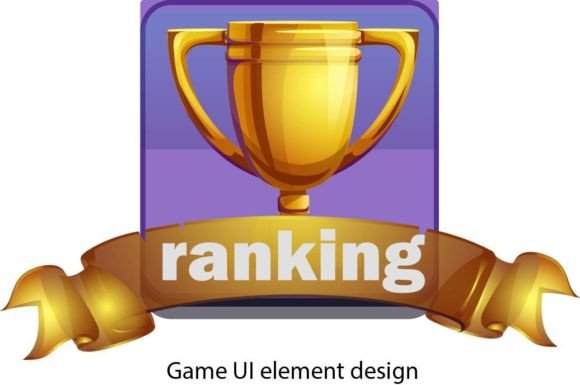
The Strategic Foundation of Engagement: Understanding Game UI Design Element Part 1
In the competitive landscape of digital entertainment, a game's success hinges not solely on narrative or mechanics, but on the silent dialogue between the player and the interface. This dialogue is facilitated by the user interface (UI) – the ensemble of visual elements that guide interaction. Game UI Design Element Part 1 represents a foundational collection of these critical components. It is not merely a set of assets; it is a strategic toolkit designed to establish clarity, convey information, and initiate the player's journey into immersion from the very first moment.
The Convergence of Aesthetics and Function in Modern Gaming
The contemporary gaming industry operates at an intersection of art, technology, and business. Players, now more discerning than ever, demand experiences that are both visually compelling and effortlessly intuitive. This expectation mirrors broader consumer trends across digital products, where sleek design and frictionless usability are paramount. Game UI Design Element Part 1 addresses this by offering elements that seamlessly blend aesthetics and functionality. For instance, a meticulously crafted menu button does not just look premium; its visual hierarchy, responsive feedback, and clear labeling work together to reduce cognitive load, allowing the player to focus on the experience itself.
This convergence is technologically enabled by advanced rendering engines and design software, but its driver is a shift in player psychology. The modern gamer often juggles multiple titles and platforms. A confusing or cluttered UI can be a decisive point of abandonment. Therefore, investing in a cohesive, professional UI system from the outset – as provided by Part 1 – is no longer a luxury but a necessity for retention.
Why Core UI Elements Command Professional Attention
Developers, product managers, and indie creators are paying increased attention to foundational UI elements for several interconnected reasons. Firstly, time-to-market pressures are intense. Utilizing a pre-designed, SEO-optimized, and cohesive set of core elements like menus, buttons, and basic icons accelerates the development cycle. Teams can prototype and iterate faster, focusing resources on unique gameplay mechanics rather than reinventing standard interface components.
Secondly, these elements serve as the visual cornerstone for brand identity within the game. Consistent use of shape, color, and typography from Part 1 establishes a recognizable aesthetic that can be extended throughout all game assets. This consistency builds trust and professionalism, which is crucial for attracting and retaining players in a crowded marketplace.
Finally, from a business perspective, a polished UI directly impacts player satisfaction and, consequently, monetization. A player who feels guided and respected by the interface is more likely to engage deeply, explore in-game purchases, and recommend the game to others. The UI is the first and persistent point of contact; its quality sets the tone for the entire commercial relationship.
Aligning with Changing Player Expectations and Workflows
The relevance of a dedicated UI element collection stems from a fundamental evolution in both player preferences and developer workflows. Players' expectations have been shaped by industry leaders; they now anticipate interfaces that are:
- Intuitive: Information should be discovered, not deciphered.
- Responsive: Feedback for every interaction must be immediate and clear.
- Accessible: Design should consider varied abilities and screen contexts.
- Visually Coherent: Every element should feel part of a unified world.
For creators, especially freelancers and small studios, the workflow has shifted towards modular, reusable design. Building every UI pixel from scratch is an inefficient allocation of talent. Instead, the strategic approach is to leverage a high-quality foundation – such as Game UI Design Element Part 1 – and customize it to fit the game's unique theme. This allows for greater creative focus on differentiation while ensuring a baseline of professional usability.
Practical Applications and Industry Observations
Consider a common scenario: a player launches a new mobile RPG. The initial screens—login, main menu, settings—are built using clear, well-animated buttons and a legible progress bar from a foundational UI pack. This immediately sets a standard of quality. The player navigates to the character inventory without confusion because the iconography is consistent and recognizable. This practical application reduces frustration and fosters engagement from minute one.
Observations across successful indie launches show a common thread: games that stumble on UI clarity often fail to recover, regardless of innovative core gameplay. Conversely, games with exceptionally polished and intuitive interfaces frequently see higher initial engagement metrics and more favorable press coverage. The UI is the handshake; a weak handshake can undermine a strong proposal.
Connecting to Larger Developments in Interactive Design
The focus on superior foundational UI elements is part of a larger development in interactive design: the move towards systematic design languages. Just as major tech companies use design systems to ensure consistency across complex products, game developers are recognizing the need for a coherent UI system within their titles. Game UI Design Element Part 1 acts as the seed for such a system, providing the rules and components that can scale as the game grows.
This trend also connects to the rise of cross-platform gaming. UI elements must now be designed with adaptability in mind—to look and function well on a PC monitor, a mobile touchscreen, and a console TV. A thoughtfully crafted foundational set considers these contexts, ensuring that engagement is maintained regardless of how the player accesses the game.
Furthermore, as gaming continues to integrate with broader lifestyle and social activities, the UI becomes a bridge. It must accommodate streaming overlays, social sharing prompts, and perhaps even AR/VR adaptations. Starting with a robust, versatile, and aesthetically neutral foundation allows developers to more easily build these bridges without compromising the core experience.
In conclusion, Game UI Design Element Part 1 is far more than a collection of digital art. It is a strategic response to a market where player engagement is fragile and competition is fierce. It embodies the principle that in game development, the pathway to immersion must be expertly constructed from the very first step. By empowering developers with tools that are both captivating and functional, it addresses the changing needs of creators and players alike, serving as a critical component in building games that not only stand out but also sustain and grow their audience in the modern digital ecosystem.