Live Streaming Overlay Screen Design: Integrating Visual Branding Into Your Broadcast Workflow
When you watch a professional streamer's channel, you notice something immediately—the cohesive visual elements that frame the gameplay, the clean panels that display recent followers, and the animated borders that give the entire broadcast a polished identity. This is live streaming overlay screen design at work. It is the collection of graphical elements that sit on top of your video feed, transforming a raw gameplay capture into a branded entertainment experience. For anyone building an online presence through streaming, these assets are not decorative extras. They are functional tools that help organize information, engage viewers, and communicate professionalism before you even speak a word.
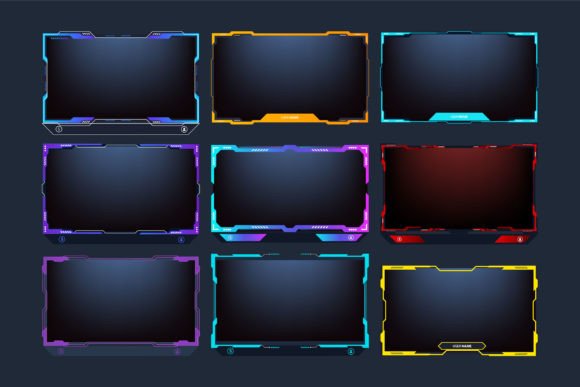
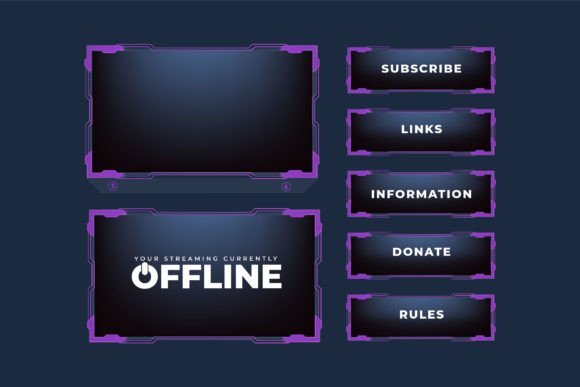
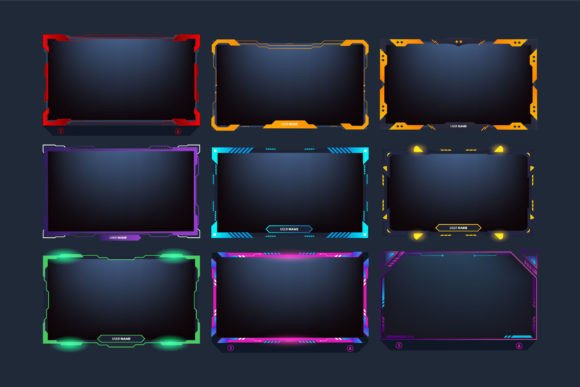
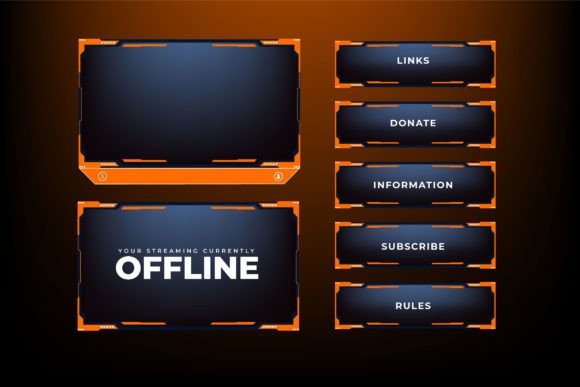
A well-executed overlay package includes multiple components that serve distinct purposes during a broadcast. The main gameplay window often features a unique broadcast screen border design that frames the action without distracting from it. Webcam frames, alert boxes, chat panels, and event tickers each occupy their own zone on the screen. When these elements share a consistent visual language—perhaps the popular pink and blue color palette that has become synonymous with energetic gaming content—the result feels intentional and trustworthy. Viewers subconsciously associate visual consistency with stream quality, which directly impacts how long they stay and whether they return.
Understanding the Components of a Streaming Overlay System
Before you purchase or create overlay assets, it helps to understand what each component does and where it typically sits on screen. A complete live streaming overlay screen design package generally includes several coordinated pieces. The main game or content window occupies the largest portion of screen real estate. Around it, you might place a unique broadcast screen border design that visually separates your content from platform interface elements. These borders do more than decorate—they create a clean edge that helps the stream look intentional even when the underlying game has its own UI elements.
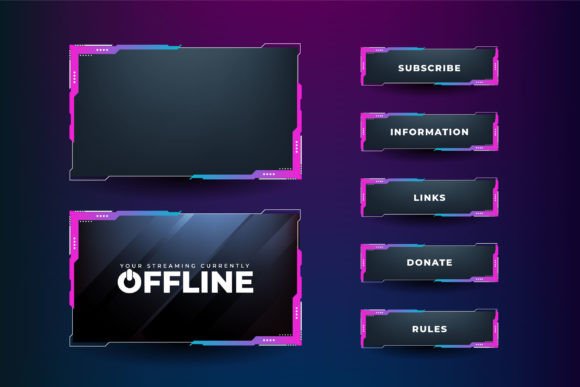
Gaming screen panel design with pink and blue colors has become particularly popular because these hues project energy and approachability simultaneously. Pink adds warmth and personality, while blue provides contrast and a sense of technical precision. When applied to overlay panels, this combination works well across different lighting conditions and game genres. A streaming overlay vector on a dark background with buttons takes this further by offering interactive or static elements that viewers can reference throughout the broadcast. The dark background ensures that light-colored text and icons remain readable, while the vector format means you can scale these assets to any resolution without quality loss.
How Overlay Design Fits Into Your Pre-Stream Preparation
Overlay design is not something you address mid-broadcast. It belongs firmly in the preparation phase, alongside audio checks, scene configuration, and content planning. Before you go live, your overlay package should be loaded into your broadcasting software—OBS Studio, Streamlabs Desktop, or similar tools—and positioned correctly across all scenes. This preparation step prevents the awkward on-stream adjustments that signal inexperience to your audience.
Think of overlay setup as part of a broader pre-stream checklist. You test your microphone, confirm your internet stability, and arrange your scenes. Integrating overlay assets into this routine means confirming that your webcam frame aligns properly, that your alert box does not obscure critical game information, and that your chat overlay updates in real time. When you purchase a streaming overlay vector on a dark background and with buttons from a design store, the files typically arrive organized by scene type, making this configuration process straightforward.
Selecting the Right File Formats and Ensuring Compatibility
A practical consideration that many new streamers overlook is file format compatibility. Most overlay designs are delivered as vector files—commonly AI, EPS, or SVG formats—alongside raster formats like JPG or PNG. Vector files are essential because they allow infinite scaling without pixelation. You can resize a gaming screen panel design with pink and blue colors from a standard 1920x1080 canvas up to 4K resolution and beyond without any degradation in quality. This future-proofing matters if you upgrade your streaming setup later.
JPG files serve a different purpose. They are ready to use immediately in any broadcasting software without additional conversion. If you do not own a vector editing application like Adobe Illustrator, the JPG versions let you get started right away. However, you lose the ability to customize colors, adjust individual elements, or modify text. This is why design stores like Ifti Digital Graphic Store include both formats in their packages. The vector files give you complete editing control, while the JPG files provide an immediate solution. The files are compressed into one ZIP archive, which you extract using WinZIP, WinRAR, or your operating system's built-in extraction tool. Once extracted, the folder structure typically separates assets by type—borders, panels, alerts, and webcam frames—so you can locate specific components quickly.
Practical Implementation Inside Broadcasting Software
Once you have extracted your overlay files, the real integration work begins inside your broadcasting application. Most streamers use OBS Studio, which supports layering sources in a specific order. Your gameplay capture sits at the bottom of the source stack. Above it, you place your overlay elements. A unique broadcast screen border design might surround the entire canvas or frame only the gameplay portion. The key is to ensure that interactive game elements—health bars, minimaps, ability icons—remain visible beneath your overlay layers. This requires testing across different games and scenes before you commit to a permanent layout.
Buttons included in a streaming overlay vector on a dark background serve multiple functions depending on how you configure them. Some streamers use button graphics as static labels for their scene transitions, showing viewers which scene is currently active. Others integrate them into interactive panels that link to donation pages, social media profiles, or Discord servers. In either case, the dark background provides the contrast needed for visibility, while the vector format ensures crisp edges regardless of display size.
Organizing Your Overlay Assets for Efficient Scene Management
Streamers who broadcast regularly learn quickly that organization prevents technical issues. Create a dedicated folder structure for your overlay assets, separating each scene's elements into subfolders. When you need to update a panel or swap a border design, you can locate the correct file immediately rather than searching through dozens of unorganized graphics. This organizational habit extends to your broadcasting software as well. Name your sources clearly—"Webcam Border Pink," "Gameplay Frame Blue," "Starting Soon Panel"—so that anyone helping with your stream can understand your setup at a glance.
Consistency across scenes reinforces your brand identity. If your intermission screen uses a certain border style and color scheme, your gameplay scene should reference those same visual cues. When you work with a live streaming overlay screen design package that includes matching elements for every scene type, this consistency becomes nearly automatic. The designer has already ensured that colors, line weights, and styling remain uniform across all components.
Customizing Vector Templates to Match Your Brand
Even the most attractive pre-made overlay package benefits from personalization. With access to the vector source files, you can adjust colors to match your specific brand palette, resize elements to fit your unique layout, or add your channel name directly into the design. Adobe Illustrator remains the industry standard for vector editing, but alternatives like Affinity Designer, Inkscape, or even Figma can handle these modifications effectively. The ability to modify the design yourself means you are not locked into someone else's vision for your channel.
If you encounter difficulties during the editing process, reaching out to the designer for guidance is a reasonable step. Design stores that prioritize customer support—such as Ifti Digital Graphic Store—typically respond with practical advice about which layers to adjust or which export settings to use. This support matters because technical frustrations during customization can delay your streaming schedule or cause you to settle for a look that does not fully represent your brand.
Quality Control and Long-Term Use Considerations
Overlay designs are not single-use assets. They accompany your channel across months or years of broadcasts, which means their visual quality must hold up under sustained scrutiny. When evaluating a gaming screen panel design with pink and blue colors, examine the edges for pixelation at your target resolution. Check that the dark background does not show compression artifacts when overlaid on bright gameplay footage. These quality checks take only a few minutes but prevent hours of frustration later.
Long-term use also means your overlay should adapt as your content evolves. Perhaps you start with a simple gameplay-only stream and later add a face cam, an alert system, or a chat overlay. A comprehensive overlay package includes elements for all these scenarios, letting you add components gradually without disrupting your existing visual identity. The vector format supports this adaptability, as you can export new variations at any time without purchasing additional assets.
Sourcing Overlay Designs That Fit Your Needs
Design marketplaces and independent graphic stores offer a wide range of overlay packages. Ifti Digital Graphic Store provides live streaming overlay screen design files that include both vector and JPG formats, covering common scenes such as starting soon, intermission, gameplay, and ending screens. The designs feature the popular pink and blue color combination applied to gaming screen panel design elements, with clean vector lines that scale cleanly. Each purchase arrives as a compressed ZIP file containing the full set of assets, which you extract and organize into your streaming folder structure.
When you own the editable vector files, you gain flexibility that free overlay downloads rarely offer. You can reposition buttons, change text labels, swap color schemes, or resize borders without depending on the original designer for every modification. This independence supports a more efficient workflow, especially when you need to make last-minute adjustments before a scheduled broadcast.
Integrating Overlays Into a Professional Streaming Setup
The difference between a stream that looks assembled and one that looks designed often comes down to how the overlay interacts with other production elements. Your alert animations, scene transitions, and even your channel panels on the platform itself should reference the same visual language established by your overlay. A unique broadcast screen border design with specific corner accents can inspire matching social media graphics, thumbnail templates, and offline screen art. This cross-platform consistency strengthens viewer recognition and makes your content more memorable.
From a workflow perspective, treating your overlay as part of a larger visual system rather than an isolated purchase changes how you approach channel updates. When you refresh your branding, you update one coherent package rather than patching together mismatched elements from different sources. This saves time, reduces visual clutter, and presents a more professional face to both new visitors and returning subscribers.